Chapter 02
The Bridge
2015–2017
From dev lead to project manager — learning that the hardest problems aren't in the code, they're between the people.
The pivot
I didn't plan to become a project manager. Revo Digital offered me the chance to step up from dev lead into a PM role, and I took it.
I'd been leading a dev team and noticed something — the gap between what we built and what clients actually needed was where the real problems lived. The code was the easy part. Someone had to stand in that gap, pull all the pieces together, and make sure the moving parts lined up from start to finish.
That feeling of being the glue — orchestrating different people, timelines, and constraints into something that actually ships — turned out to be the work I'd been looking for.
Myanmar's first OTT TV app
The biggest project was PyonePlay — Myanmar's first over-the-top television application. Live TV and on-demand replay, streaming free to anyone with a smartphone.
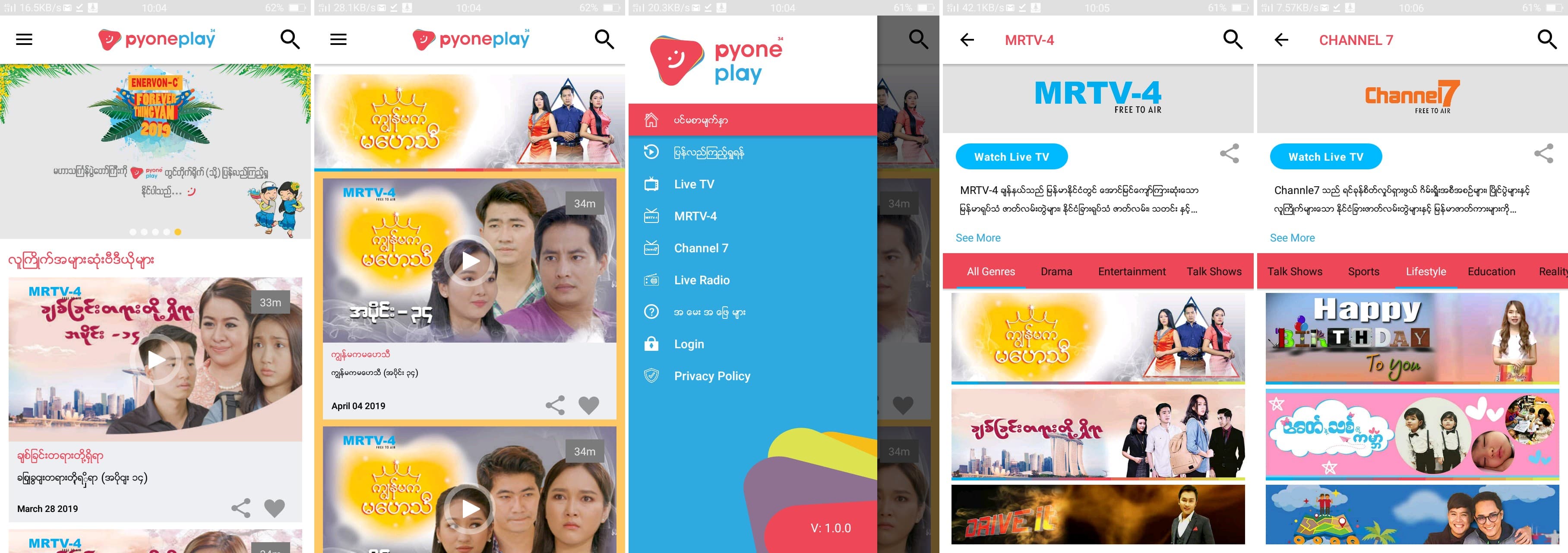
The channels included MRTV-4, Channel7, and others. The target audience was broad — essentially anyone in Myanmar with a phone and a data connection. Thanks to the 3G rollout I'd watched unfold in the previous chapter, that was suddenly a lot of people.
A regional SEA football match was going live on PyonePlay over the weekend. We'd spent the entire week preparing — reinforcing servers, tuning load balancers, stress-testing for concurrent users we'd never actually seen before. When the broadcast went live, key team members and infrastructure consultants were all online, watching the numbers climb in real time. That night taught me something no certification ever could: risk management isn't a document you file — it's a skill you perform under pressure.
Building for garment workers
The second set of projects came through SMART Myanmar — a programme funded by the European Union and implemented by sequa to improve conditions in Myanmar's garment industry. We delivered two applications.
Shwe Job was an educational app for garment factory workers. It taught occupational safety, health practices, and Myanmar labour laws through stories, illustrations, and voiceovers — because many workers couldn't read well enough for text-only content. It included a salary calculator so workers could verify their monthly pay.
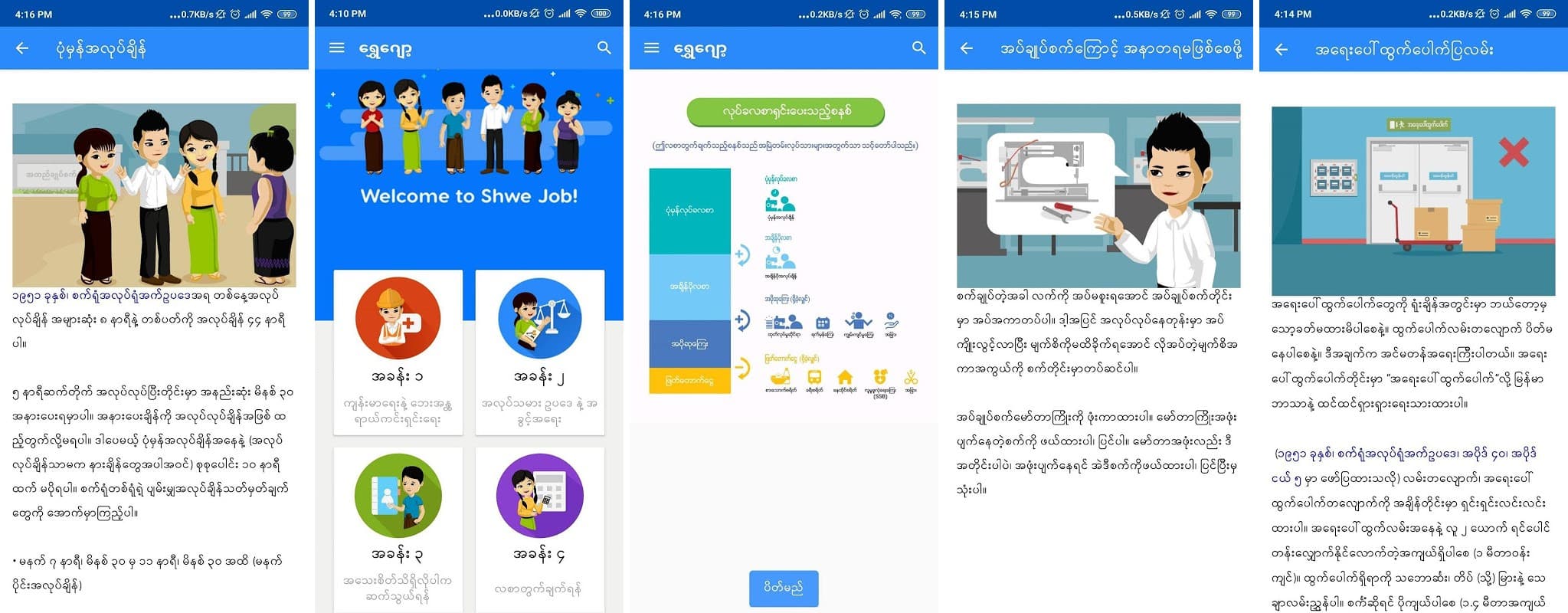
We launched it on International Workers' Day 2017 in Hlaing Thar Yar Township — one of Yangon's industrial zones where the garment factories are concentrated. About 120 workers attended. The energy in the room was something I hadn't expected — workers genuinely excited to try the app, asking questions, exploring the features.
We'd already spent time in garment factories during development, interviewing workers and gathering insights, so this wasn't unfamiliar territory. But seeing the finished product in their hands was different.
The context that made this meaningful: smartphone ownership among garment workers had grown from under 1% to over 90% in just four years. We were building for people who'd gone from zero digital access to smartphone-first in the time it took to finish a single project cycle.
The MGMA digitisation project brought the Myanmar Garment Manufacturers Association's application processes online. Less dramatic than Shwe Job, but it was the plumbing that made the industry's digital shift work.
How it ended
It ended well, on good terms. Revo Digital pivoted toward digital marketing. I wanted something different — building platforms that change how industries work, not just how they advertise.
I chose to join rgo47, an emerging local e-commerce player trying to do something ambitious: transform how Myanmar shops.
What I carried forward
Two years at Revo gave me range. I managed an entertainment platform, EU-funded social impact apps, and an industry digitisation project — each with different stakeholders, different success metrics, different ways to fail. Holding multiple project contexts at once became a core skill I didn't know I was building.
The garment worker projects taught me what building for the real market means. Smartphone adoption was exploding, but wifi barely existed. Most users were on 2G or 3G. Phone models ranged from flagship Samsungs to no-name Chinese handsets with barely enough RAM to run a browser.
Chasing the latest technology without accounting for those constraints would guarantee your app failed in the field. That lesson — build for the environment your users actually have — permanently changed how I think about product decisions.
And the PyonePlay crisis taught me that preparation matters, but composure matters more. The plan will break. What you do in the next thirty minutes is what counts.